
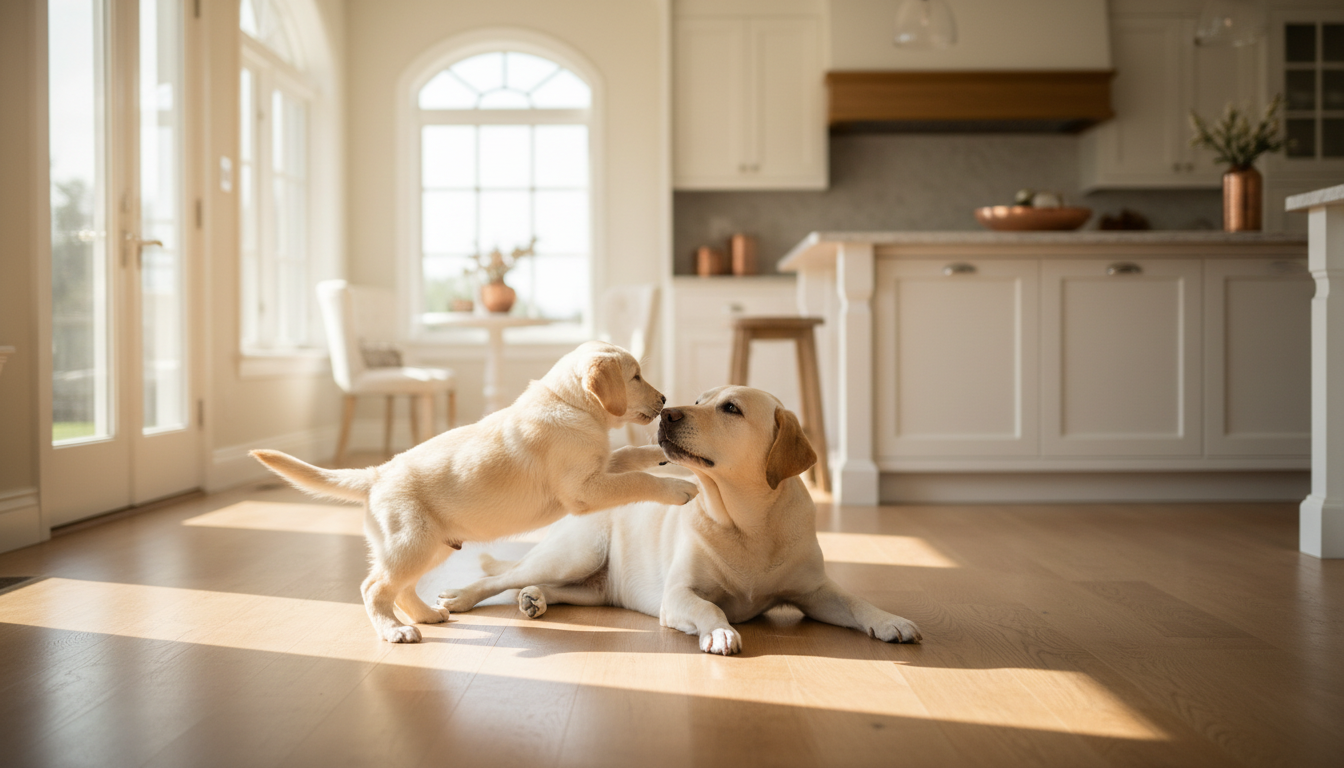
The holidays reshape a house. More people come through the door, counters fill with dishes, and a plate set down for thirty seconds is suddenly at nose height for a Labrador. Most dogs are not trying to cause trouble. They are doing what dogs do around food. The job falls to us to make the easy mistakes hard to make.
This guide covers the holiday foods that most often cause problems, why they matter, and the practical setup that keeps a busy kitchen safe.
The foods to keep out of reach
The ASPCA’s Animal Poison Control Center publishes a list of people foods to avoid feeding pets. Several items on it show up on nearly every holiday table.
Chocolate, coffee and caffeine
Chocolate, coffee and caffeine contain methylxanthines. According to the ASPCA, they can cause vomiting and diarrhea, panting, excessive thirst and urination, hyperactivity, abnormal heart rhythm, tremors, seizures and even death. The darker the chocolate, the higher the risk. Baking chocolate and cocoa powder have the highest concentrations; white chocolate has the lowest. Holiday baking means more of the dangerous kinds are sitting on the counter.
Xylitol
Xylitol is a sweetener used in some gum, candy, baked goods and toothpaste. The ASPCA notes it can cause low blood sugar and potentially liver damage, with early signs that include vomiting, lethargy and loss of coordination that can progress to seizures. The U.S. Food and Drug Administration has published a consumer warning, Paws Off Xylitol; It’s Dangerous for Dogs. Sugar-free desserts made for a diabetic relative and guests’ purses with gum or mints are the usual holiday sources. Check labels on anything “sugar-free.”
Grapes and raisins
Grapes and raisins can lead to kidney damage in dogs, according to the ASPCA. Think fruit trays, fruitcake, stuffing recipes with raisins, and trail mix set out for guests.
Onions, garlic and chives
These Allium vegetables can cause gastrointestinal irritation and red blood cell damage that can lead to anemia. They turn up in stuffing, gravy, green bean casseroles and many leftovers.
Alcohol and raw yeast dough
Alcoholic drinks can cause vomiting, incoordination, breathing difficulty and worse. Raw bread dough is a double problem: it can expand in the stomach and produce alcohol as the yeast ferments. Rising dinner rolls on the counter deserve a closed door.
Macadamia nuts and fatty foods
Macadamia nuts can cause weakness, vomiting, tremors and hyperthermia in dogs. Other nuts and rich, fatty foods, including turkey skin, drippings and buttery sides, can cause vomiting and diarrhea and potentially pancreatitis.
Bones
Cooked and raw bones can injure or obstruct the digestive tract. A turkey carcass in an open trash bag is one of the most common holiday temptations.
Set up the kitchen like a work zone
You can’t supervise every second during a holiday meal. A few physical changes do more than constant reminders:
- Use a gate or a closed door to keep dogs out of the kitchen while cooking and serving.
- Push food to the back of counters, especially near edges a tall dog can reach.
- Use a lidded trash can or take bags straight outside. Carcasses, foil and string from a roast are all hazards.
- Give guests a place for purses and coats that is off the floor and behind a door.
- Assign one person to be responsible for the dog during the busiest hour.
Give the dog a better option
Dogs left with nothing to do will find something. Before guests arrive:
- Take a long walk or have a play session.
- Set up a quiet room with a bed, water and a safe chew or food puzzle made with the dog’s usual food.
- Stick to the regular feeding schedule. A hungry dog is a more determined dog.
Talk to your guests
Most guests love dogs, which is part of the problem. A friendly “please don’t feed him from the table, even a little” at the door prevents a lot of slipped scraps. Children especially should be told what not to share. If you want guests to be able to treat the dog, put a small bowl of the dog’s own treats by the door.
If your dog eats something dangerous
Act quickly. The ASPCA notes that some effects, like alcohol absorption, happen fast, and xylitol-related liver damage can develop within 12 to 24 hours.
- Call your veterinarian or an emergency veterinary clinic right away.
- Call the ASPCA Animal Poison Control Center at (888) 426-4435, which is available 24 hours a day, 365 days a year. A consultation fee may apply (ASPCA Animal Poison Control).
- Have the packaging or recipe handy so you can say what was eaten, how much and when.
- Don’t try home remedies or induce vomiting unless a veterinary professional tells you to.
It helps to know before the holidays where your nearest after-hours clinic is. The DogUnion veterinarian directory is a good place to start, and our kennels and boarding directory can help if you will be traveling and need care for your dog.
A short holiday checklist
- Chocolate and baked goods stored high or in closed containers
- Sugar-free products checked for xylitol
- Trash lidded or taken out after every meal
- Gate or quiet room ready before guests arrive
- Guests told the house rule about feeding
- Vet and poison control numbers saved in your phone
Breed and size matter, too. A large retriever can reach more than a small terrier, and some breeds are more food-motivated than others. Our breed guides, like what to ask before bringing home a Labrador Retriever, cover the everyday habits that shape a dog’s behavior around food.
This article is general information and not veterinary advice. If you think your dog has eaten something harmful, contact a veterinarian or animal poison control immediately.
Leave a Reply